
Rat, Mouse & Rodent Control in Lakewood Park, FL
Roof-rat and mouse control built for Lakewood Park’s 1959 rooflines and lakeside landscaping — we find the runways, clear the colony and seal the roof so they can’t climb back in.

Why rodents are common in Lakewood Park
Lakewood Park spreads across wooded, lake-dotted lots north of Fort Pierce, where homes meet pine flatwoods, oak hammock and grassy swales. That woodland edge feeds a steady rodent population, and larger properties give rats and mice plenty of cover to work from. We track them from the tree line to the attic and shut the door behind them.
The pine flatwoods and oak hammocks that make Lakewood Park green also make it a rodent haven. Seeds, insects and dense ground cover feed a large outdoor population, and the retention lakes and Five Mile Creek keep water close by. Homes on the woodland edge sit right in the path of animals looking for a warmer, drier place to nest.
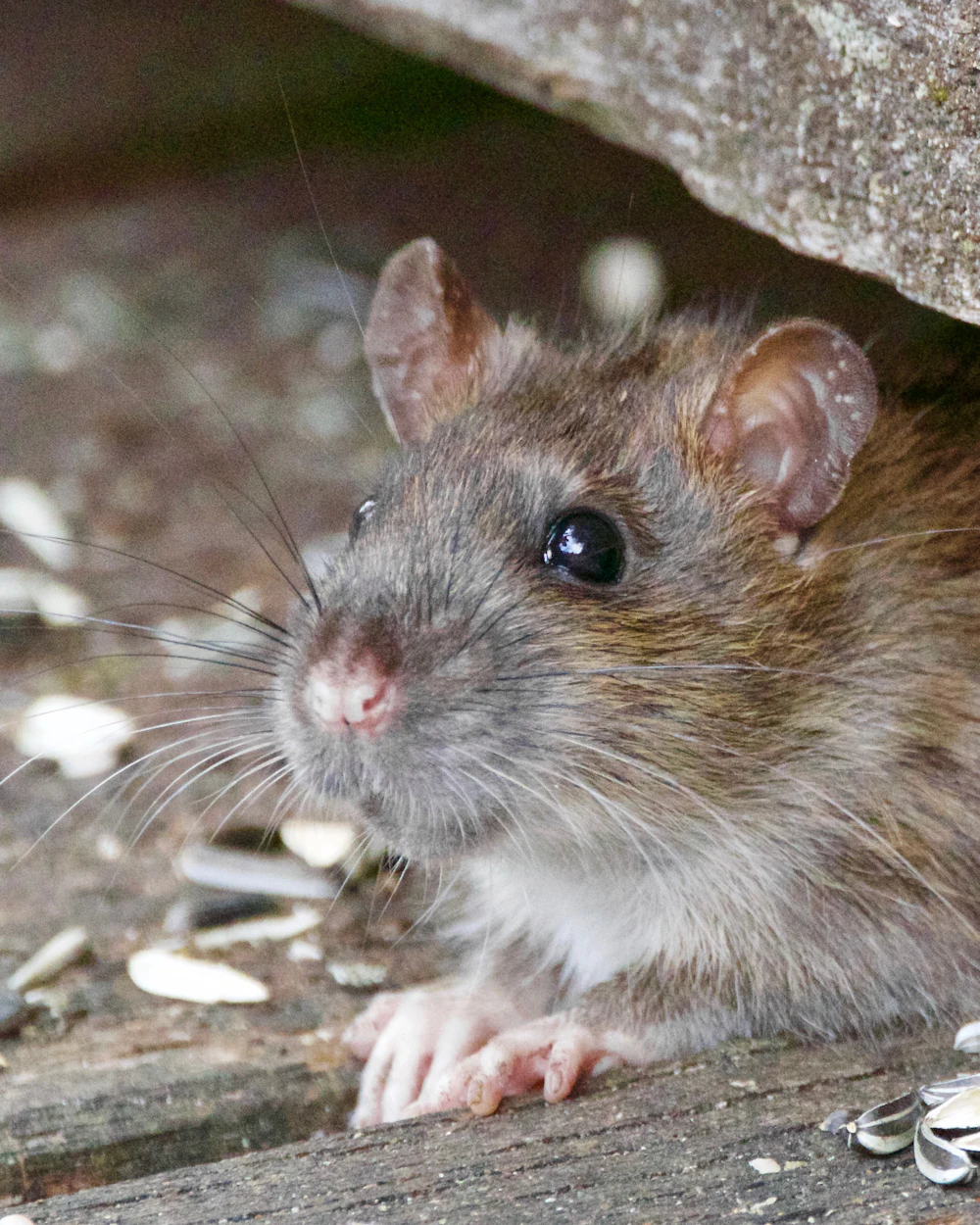
Roof rats climb the hammock oaks and cabbage palms and move along limbs onto screened lanais and roof lines. House mice come off the swales and brush at ground level, exploiting shed thresholds, garage corners and any pipe gap left open where the lawn meets the foundation.
The local “palm rat” climbs rather than burrows — which is why sealing the roofline, not just setting traps, is what finally ends it.
Signs of a rodent problem in Lakewood Park
In Lakewood Park, these are the signs it's time to call — before the damage spreads.
Scratching in the soffit
On single-story homes here, the first sign is often rustling or gnawing at the soffit line where limbs overhang, as roof rats test the seam before pushing inside.
Droppings in the shed
Detached sheds and garages on these larger lots collect mouse droppings around stored feed, mulch bags and clutter well before the main house is touched.
Grease trails on beams
Dark smudge marks where rodents brush the same route — along a rafter or the top of a wall plate — reveal an established run through the attic.
Spotting any of these in your Lakewood Park home? The sooner we inspect, the less damage spreads — and the inspection is free.
Our rat, mouse & rodent control process in Lakewood Park
Four steps, one call — inspection, humane removal, sealing and follow-up, all documented.
Full-structure inspection
We map runways, droppings and every entry point — including roofline, vents, pipe penetrations and the garage.
Poison-free removal
Strategic snap and live trapping clears the active population fast, with no bait dying inside your walls.
Exclusion seal
Steel wool, hardware cloth and sealant close every gap a rodent could exploit — down to a dime.
Decontaminate
We remove droppings and soiled insulation, then sanitize and deodorize the affected space.
Dealing with rodents in Lakewood Park? We respond the same day.
Call for same-day service · (772) 227-1522How roof rats get onto Lakewood Park rooflines
The gaps we seal to shut them out.
Roof-line & vent gaps
Roof rats enter through gaps at the fascia, ridge vents and where plumbing vents penetrate the roof.
Utility & pipe penetrations
Openings around AC line-sets, water pipes and electrical conduit are classic mouse and rat entries.
Garage doors & weep holes
Worn garage-door seals and unscreened weep holes let mice walk straight in at ground level.
Keeping rodents away from Lakewood Park homes
Removing the rodent is half the work. These steps keep the next one out of your Lakewood Park home.
Trim oak and palm limbs back from the roof and lanai so rats cannot cross from the hammock.
Keep sheds tight — seal thresholds and store feed and seed in metal cans with lids.
Thin dense ground cover and brush away from the foundation to remove mouse harborage.
Screen weep holes, vents and pipe gaps along the ground line before the cool-season push.
If wildlife returns through a spot we sealed, we come back at no charge. Satisfaction Guaranteed — If our exclusion fails, we take responsibility.
Rodents don’t take a Florida winter off
In Lakewood Park’s mild climate roof rats breed year-round, but pressure spikes twice: through the humid summer as the lakes and fruiting landscaping flush with food, and again as the first cool nights push them out of the flatwoods and into warm attics. There’s no off-season here — which is why sealing the roofline beats chasing them with traps.
Rat, Mouse & Rodent Control in Lakewood Park — FAQ.
Quick answers — or call us 24/7 for anything else.
How much does rat, mouse & rodent control cost in Lakewood Park? +
Rodents keep showing up in my shed before the house. Why? +
Does backing onto pine flatwoods mean I will always have rodents? +
Should I use bait stations around a big wooded lot like mine? +
How do you get rid of rats and mice? +
Are rodent droppings dangerous? +
Do you use poison? +
How fast can you get to my Lakewood Park home? +
Looking for something else? See all wildlife removal services in Lakewood Park.
What Lakewood Park & Treasure Coast homeowners say.
"Swift Wildlife Removal is the company to call if you have a rat infestation. After calling several places, they were the only ones who could come the same day. They came within the expected time and took care of the problem."
"Emergency situation - had mice running in my house and they came late at night to deal with it. A day later and problem is solved. Super fast, picked up first time, and late night is pretty awesome these days."
"Helped me a ton with rodents."
"⭐️⭐️⭐️⭐️⭐️ 10 Stars. Excellent service! Swift safely rescued Ursula the Raccoon and her babies. Choose Swift… you won't be disappointed!"
"If you need wildlife removed the right way, call Issac! I was terrified of the raccoons sneaking around my place at night, getting into our garbage every night. Until we met Issac and his wife! They are professional, on time, and get straight to the point. Issac explained everything clearly and handled the problem fast with no stress."
"Absolutely outstanding service! The team was professional, quick, and incredibly knowledgeable. They safely removed raccoons from my property and made sure everything was secure afterward. I'm beyond impressed with their work!"
Rat, Mouse & Rodent Control across Lakewood Park
We handle rat, mouse & rodent control across Lakewood Park and the surrounding northern St. Lucie County communities — the lake streets off Kings Highway, the Emerson and Deland Avenue corridors, Spanish Lakes and Angle Road — with same-day service standard and emergency response typically under an hour.
- The Kings Highway corridor
- Near Lakewood Regional Park on Emerson Ave
- The Deland Avenue & Lee Boulevard area
- Lots bordering the Indrio Savannahs Preserve

Rat, Mouse & Rodent Control in Lakewood Park?
Humane, fully-insured rat, mouse & rodent control in Lakewood Park and across northern St. Lucie County. Free inspection, written estimate, live answer 24/7.
- Free on-site inspection & written estimate
- Humane, FWC-compliant removal
- Sealed for good — written re-entry guarantee
- Live answer 24/7 · same-day service
Wildlife in a public area or on a neighbor's property? Contact FWC at (888) 404-3922 or local animal control.